The Ultimate Backcountry Checklist: Preparing for the Unknown
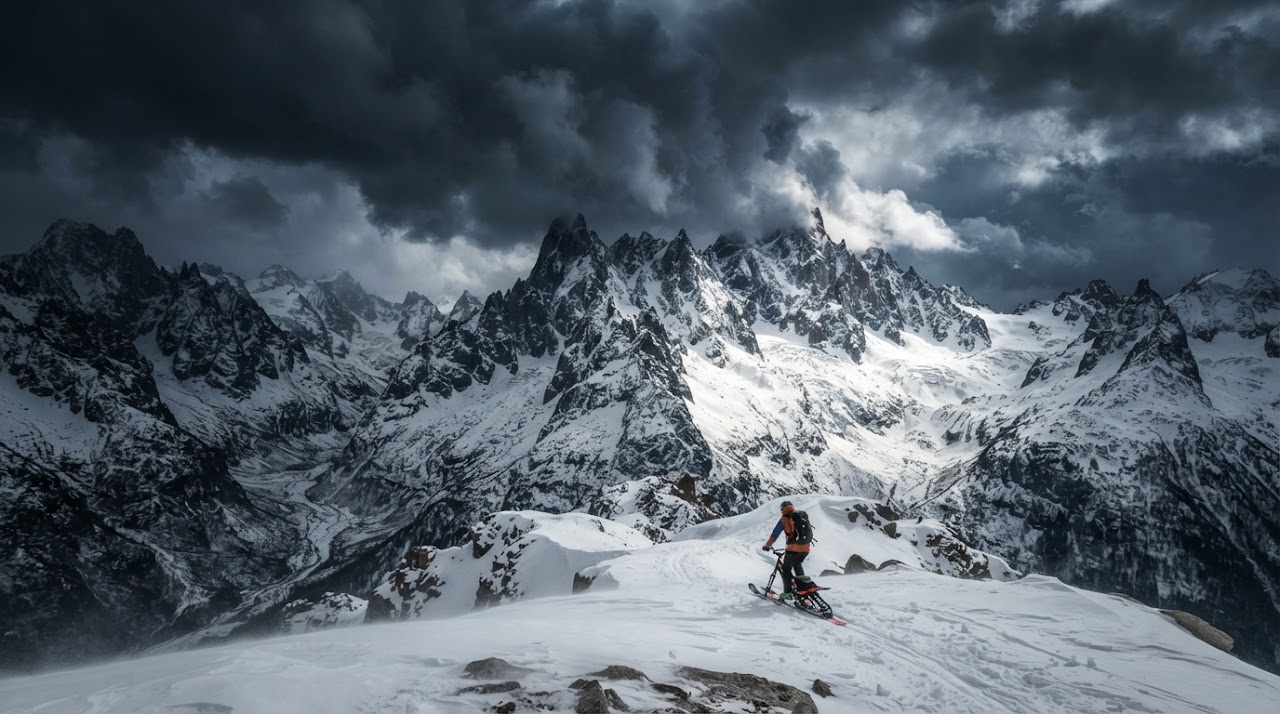
Every backcountry descent begins long before you clip into your bindings. The terrain that makes ski biking in the backcountry so rewarding — untouched powder, quiet ridgelines, technical lines — is the same terrain that punishes poor preparation without warning. A methodical checklist won’t remove the risk, but it closes the gap between what you can control and what you can’t.
The Non-Negotiable Rescue Kit
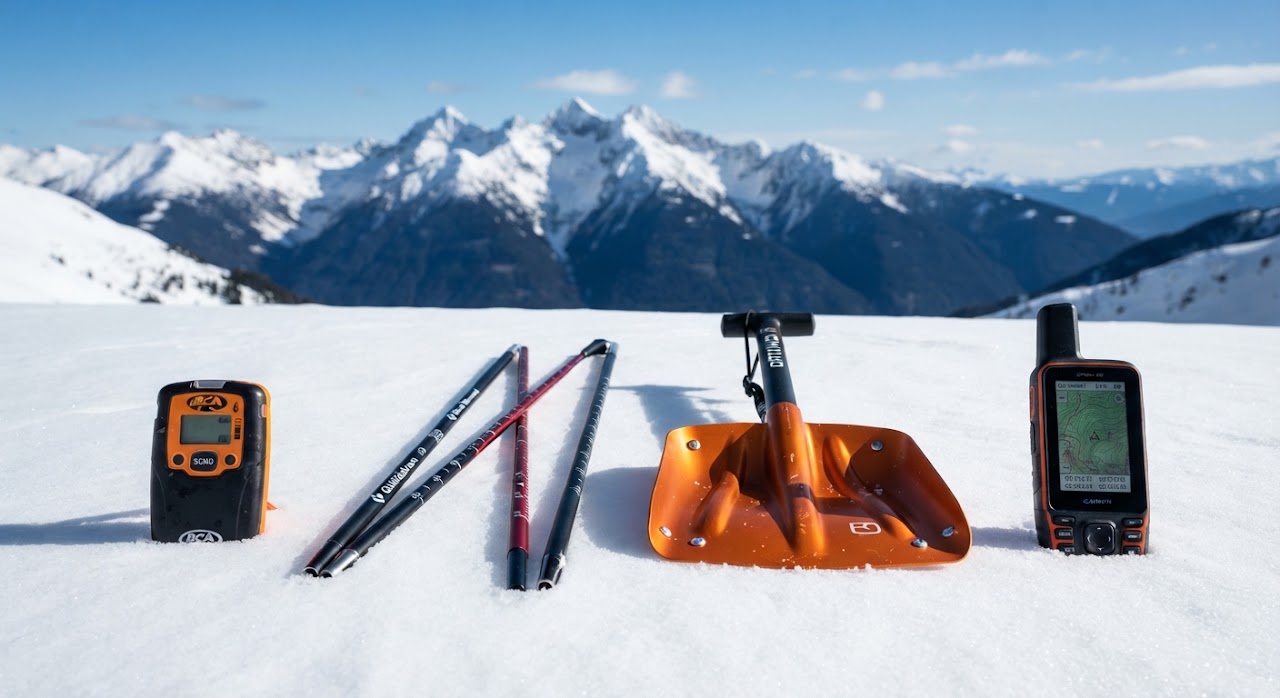
Before you consider any other piece of equipment, you need the three tools that make companion rescue possible. These are not optional extras for “serious” days out — they belong in your pack every time you leave the boundary rope, regardless of how stable the snowpack looks.
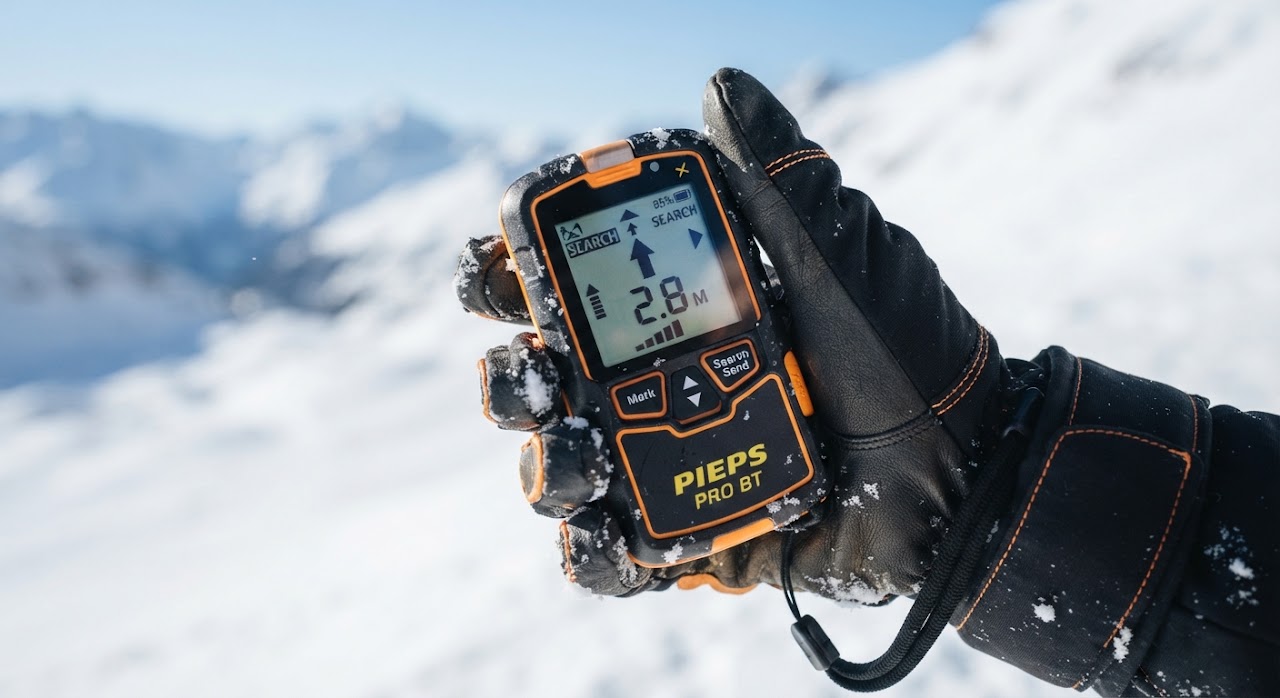
- Avalanche transceiver (beacon): Worn on your body, not in your pack, with fresh batteries and a function check at the trailhead every single outing.
- Collapsible probe: At least 240 cm, used to pinpoint a burial location before you start digging.
- Metal shovel: Plastic blades shatter against wind-packed debris; you need a metal blade and a shaft long enough to leverage hard snow.
Carrying this kit is only half the equation — you and everyone in your group need to practice with it regularly so the motions are automatic under stress.
Communication and Navigation Tools
Cell coverage disappears fast once you drop behind a ridge. Treat communication and navigation gear as part of your safety system, not a convenience.
- A satellite communicator or personal locator beacon for areas with no cell signal.
- A GPS device or phone app with offline maps downloaded in advance, plus a paper map and compass as backup.
- A charged, cold-rated battery pack — lithium batteries lose capacity quickly in freezing temperatures.
Layering for Volatile Mountain Conditions
Mountain weather can shift from bluebird to whiteout in under an hour. Dress in a system you can adjust on the move rather than a single heavy layer that leaves you either overheating on the climb or chilled on the descent.
- A moisture-wicking base layer to manage sweat during high-output climbs.
- An insulating mid-layer that can be added or removed at transitions.
- A waterproof, windproof outer shell with sealed seams.
- Spare gloves, a warm hat, and a buff or balaclava for exposed ridgelines.
Pre-Trip Planning and Forecast Checks
The best rescue kit in the world cannot compensate for a bad decision made before you ever start moving. Pull the current avalanche forecast from your regional avalanche center and read the full discussion, not just the danger rating icon. Cross-reference it with a mountain-specific weather forecast for wind speed, direction, and precipitation timing, since wind loading and new snow are frequently the deciding factors in whether a slope holds.
Study your intended route on a map beforehand and identify:
- Slope angles, especially anything in the 30–45 degree range where most slab avalanches occur.
- Terrain traps such as gullies, cliffs, or dense trees below your line.
- Safe zones and regroup points spaced along the route.
- A clear turnaround time and a backup, lower-consequence route.
Partner Protocols and Group Discipline
Solo backcountry travel removes the entire premise of companion rescue. Travel with partners, agree on a plan before you leave the car, and stick to it in the field.
A trip plan is only useful if someone who isn’t on the trip has a copy of it.
Leave a detailed trip plan with someone at home, including your route, expected return time, and vehicle location. In the field, expose only one person to a slope at a time, watch each other from safe zones, and agree in advance that any member can call for a turnaround without debate.
Responsible use note: This checklist is an organizational reference, not a substitute for hands-on instruction. Terrain and snowpack evaluation, rescue skills, and decision-making under pressure require formal avalanche and backcountry training from a certified provider, along with regular practice, before you rely on this gear in the field.