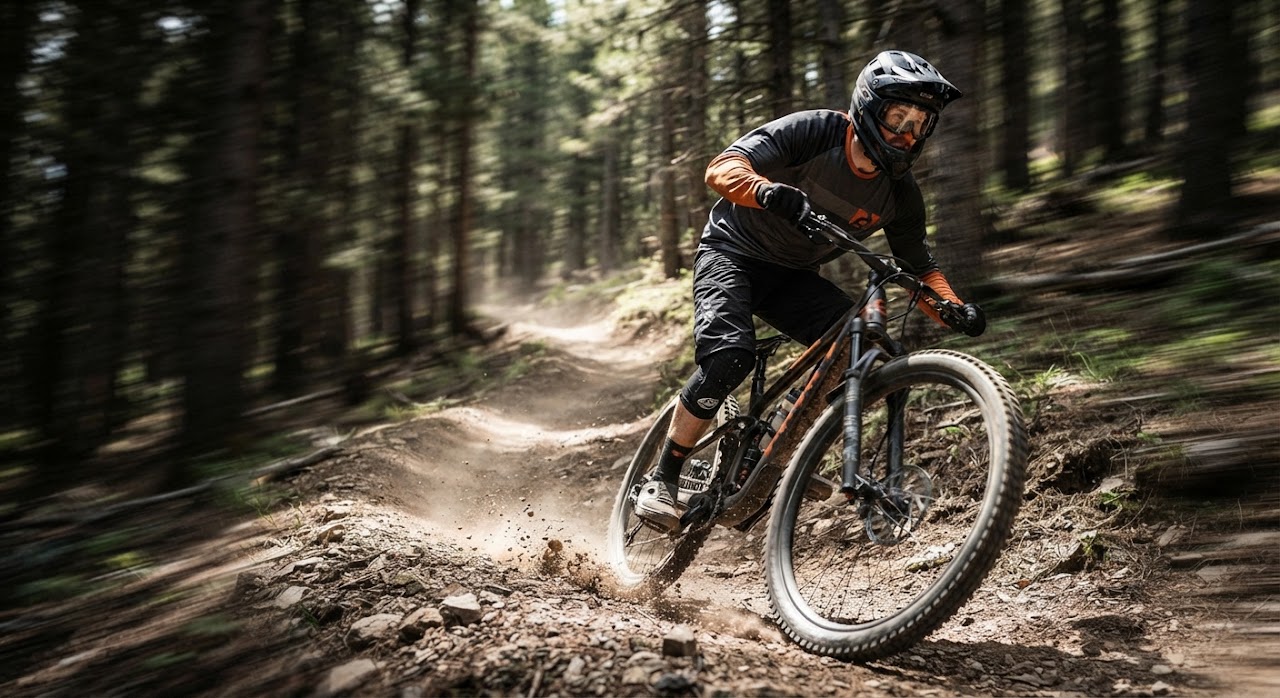
Choosing an All-Mountain Bike for Year-Round Riding
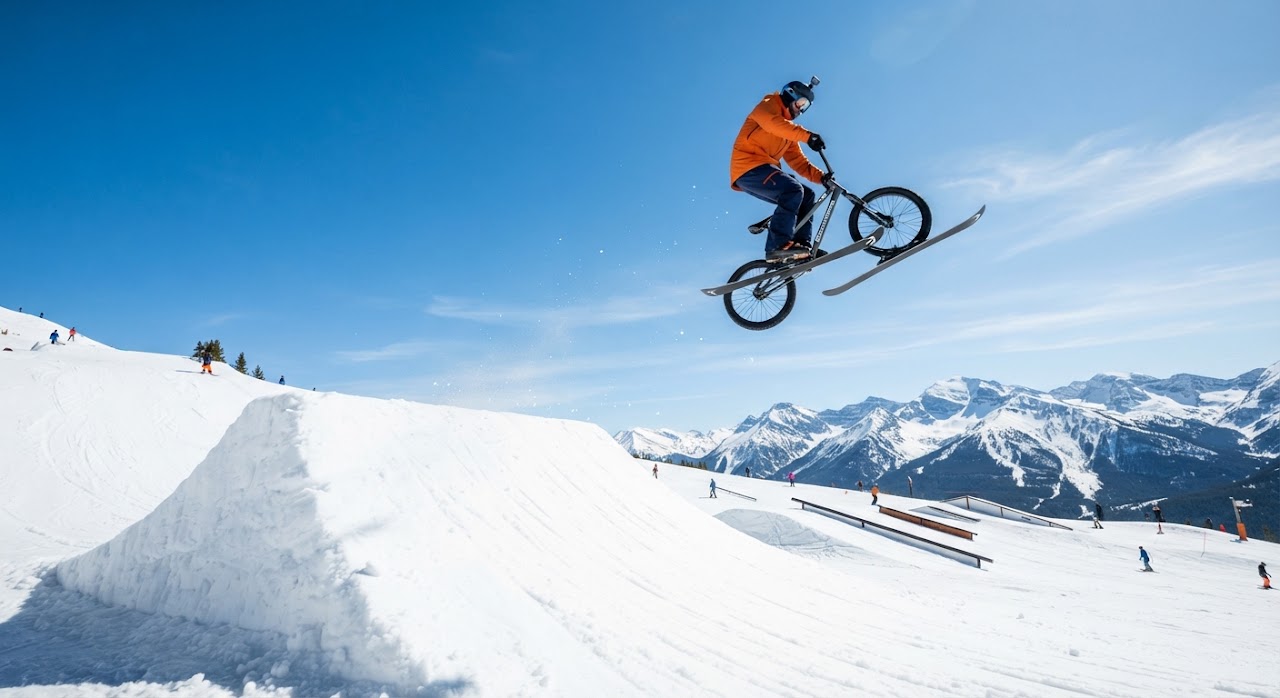
If you split your year between dirt and snow, your mountain bike doesn’t just need to handle a single trail system — it needs to build the exact skills and fitness you’ll lean on all winter. An all-mountain bike is the right tool for that job, sitting in the sweet spot between a lightweight trail bike and a burly downhill rig. Here’s how to choose one that earns its keep in both seasons.
Travel: Enough to Learn On, Not So Much You Get Lazy
All-mountain bikes typically run in the 140mm to 160mm travel range, front and rear. That’s enough suspension to absorb rock gardens and rough descents without punishing you for every mistake, but not so plush that it masks poor line choice or sloppy body position.
- Under 140mm: Great for pedaling efficiency, but you’ll get bounced around on the rougher descents that best mirror ski bike terrain.
- 140-160mm: The sweet spot — enough squish to stay composed on chunky trails while still rewarding good technique.
- Over 160mm: Descends like a dream but climbs poorly, which matters if your riding days are limited and you want maximum trail time per session.
Geometry That Builds the Right Habits
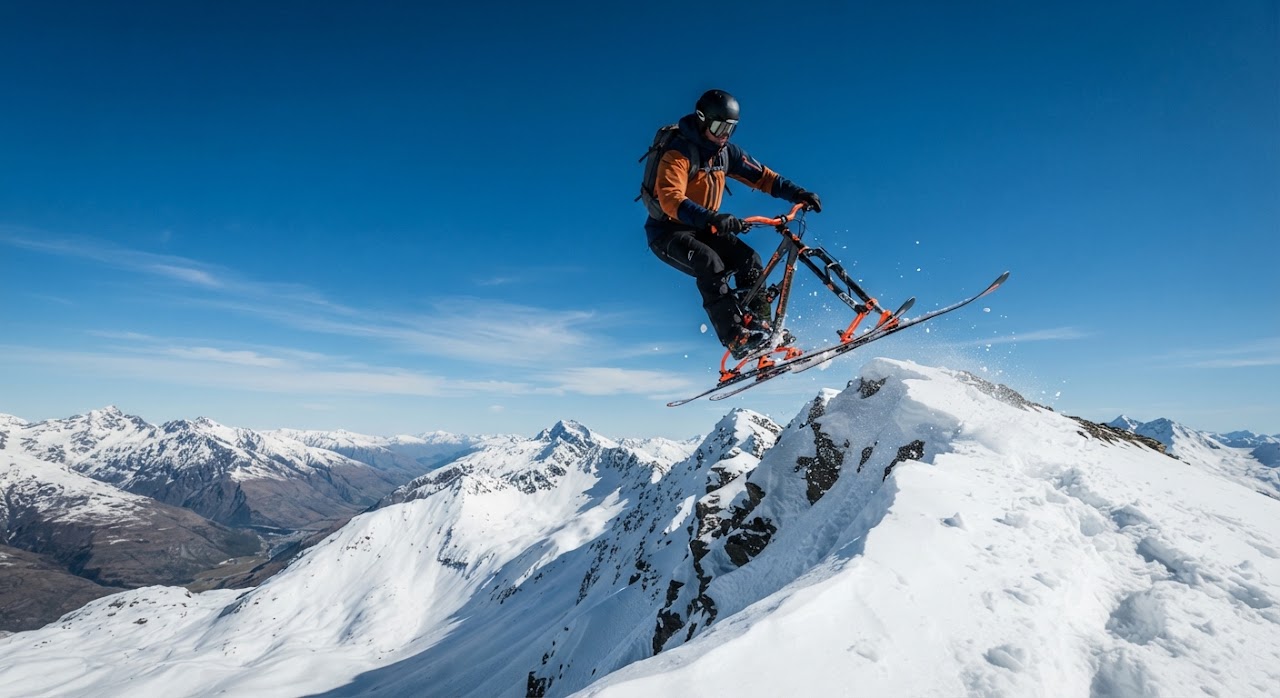
Look for a slacker head angle (roughly 64-66 degrees), a reasonably long reach, and a steep seat tube angle for efficient climbing. This geometry puts you in a stable, centered stance at speed — the same neutral, weight-forward-but-ready position you want to default to on a ski bike. Bikes with cramped, old-school geometry tend to teach you to sit back and steer with your arms, a habit that translates poorly to snow, where over-steering with the upper body just breaks your edge loose.
Wheel Size and Stability
Larger wheels roll over chatter more smoothly and hold speed better through rough sections, which builds confidence at higher velocities — confidence you’ll want when a ski bike run opens up into a fast, open pitch. Mixed wheel setups can sharpen cornering agility if that’s your priority, but a full-size setup is usually the more forgiving, more transferable choice for someone splitting time between two disciplines.
Tires: Versatility Over Specialization
Skip the ultra-specific race tire and look for a versatile all-mountain tread — moderate center knobs for rolling speed, taller side knobs for cornering bite. This kind of tire keeps you comfortable across hardpack, loose-over-hard, and everything in between, which is exactly the variability you need to get comfortable with before facing variable snow.
Tubeless Setup Is Non-Negotiable
Running tubeless lets you drop tire pressure for better grip and a smoother ride without the flat-tire risk of tubes. Since you’re likely putting more total days on this bike than a single-season rider would, the reduced maintenance and better puncture resistance pay for themselves quickly.
Durability and Serviceability for Two Seasons of Wear
A bike doing double duty as your primary trail machine and your off-season ski bike training tool needs to hold up to more total hours in the saddle and more storage cycles between uses. Prioritize:
- Sealed bearings in the pivots and headset to resist the corrosion that builds up from repeated wash-downs and long storage stretches.
- Standard, widely available parts (common bottom bracket standards, common shock sizes) so replacement parts aren’t a scavenger hunt mid-season.
- A frame protection kit — chainstay guards and downtube protection — to handle the rock strikes that come with aggressive all-mountain riding.
- A suspension service schedule you actually follow, since a bike ridden year-round accumulates wear faster than a seasonal one.
The best all-mountain bike for a ski biker isn’t the lightest or the flashiest — it’s the one that keeps working, and keeps teaching you something, every single time you ride it.
Maintenance Habits Worth Building Now
Get comfortable with a basic post-ride routine: quick drivetrain wipe-down, suspension air pressure checks, and a periodic bolt torque check. These habits matter more for a year-round bike because deferred maintenance compounds faster when a machine barely gets a true off-season to rest.
Choose the bike that makes you a better, more confident descender on dirt, and you’ll show up to opening day already ahead of the curve — with the fitness, the reflexes, and the equipment habits already dialed in.