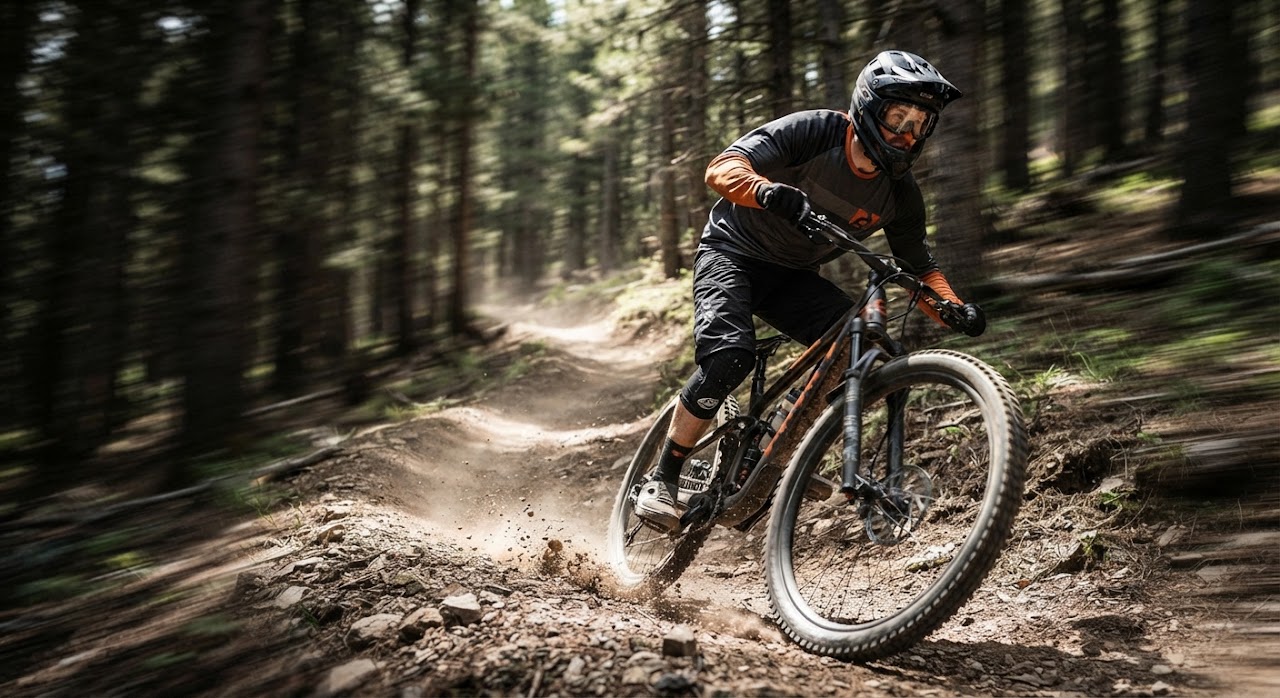
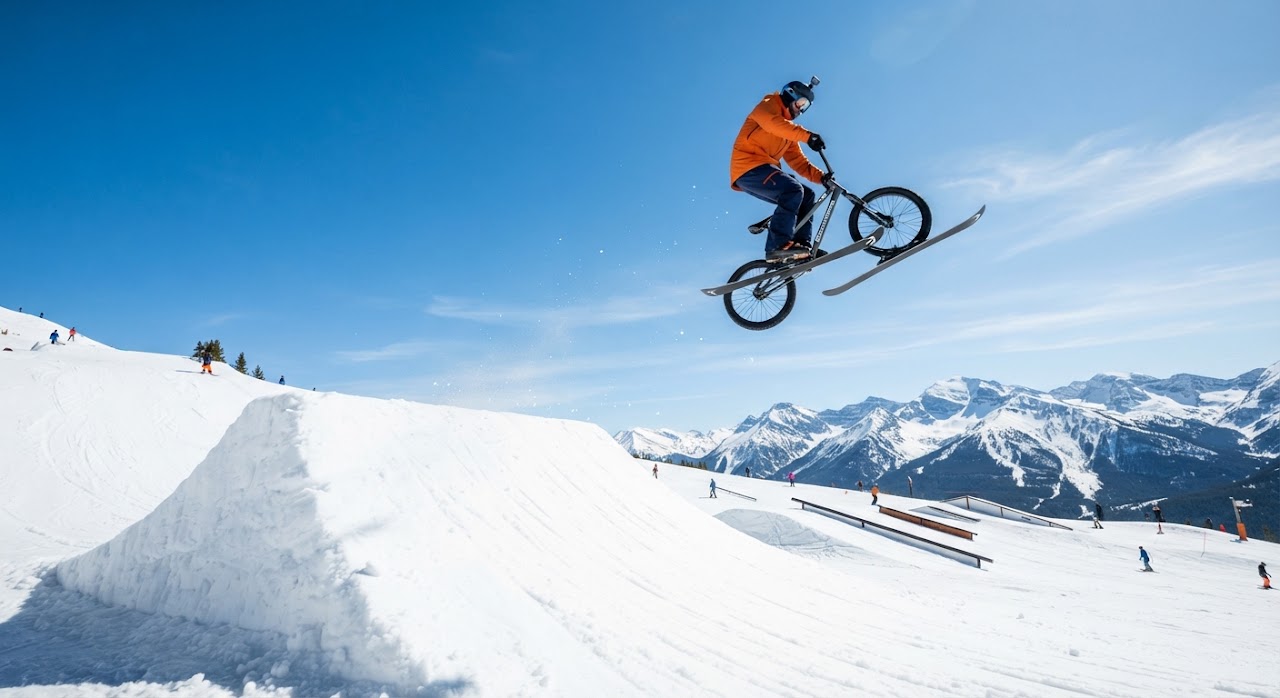
From Dirt to Powder: Translating Downhill Skills to Ski Bikes
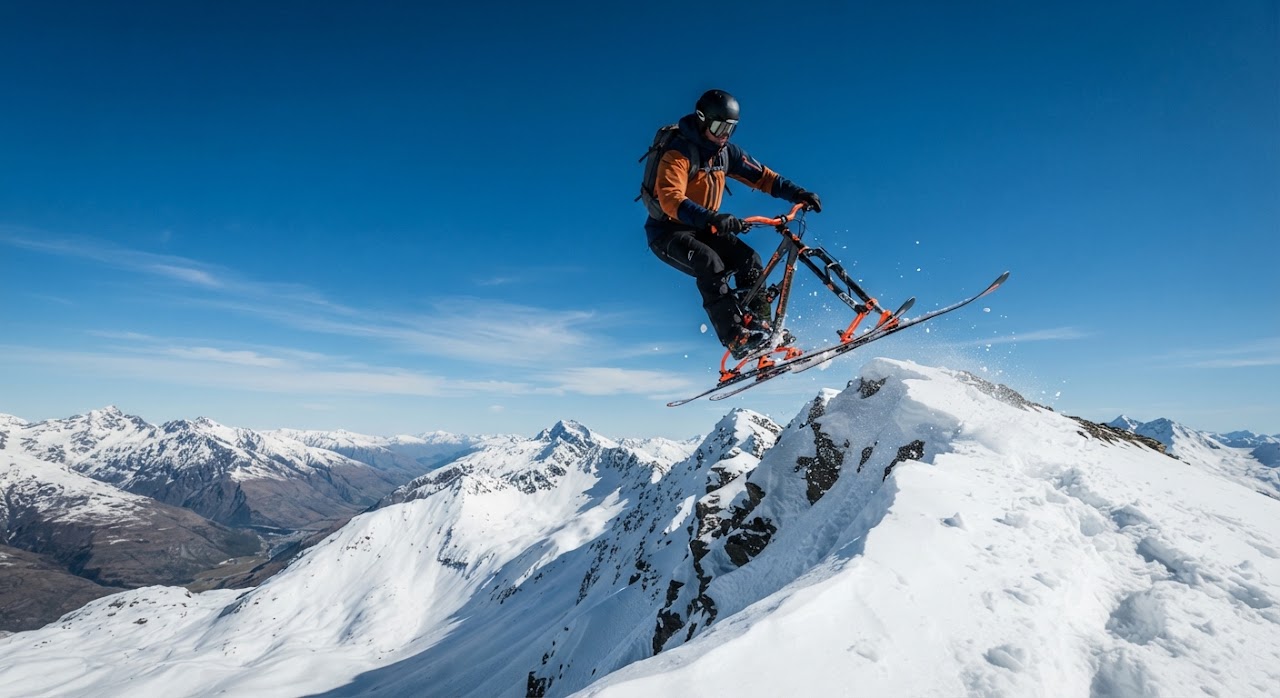
Every ski biker who came up through mountain biking has felt it: that first run of the season where your instincts fire correctly but the bike doesn’t respond the way it did on dirt. Snow and dirt reward the same instincts but demand different inputs, and understanding exactly where those systems diverge is what separates a rider who muscles through winter from one who actually carves it.
Braking Versus Edging
On a mountain bike, speed control lives almost entirely in your brake levers. Modulate the rear for control, feather the front for real stopping power, and the tires handle traction through friction against dirt or rock. A ski bike has no brake lever doing that job — speed control comes from the edges of the skis biting into snow and from deliberate skidding or drifting.
What Carries Over
The habit of controlling speed before a turn rather than during it transfers directly. Downhill riders already know to shed speed on the straight and let the corner run clean — that same sequencing keeps a ski bike from washing out mid-turn.
What Doesn’t
The physical motion is completely different. There’s no lever to squeeze; instead you’re rolling the skis onto their edges and adjusting pressure through your feet and the frame. Riders who keep hunting for a brake lever with their hands are usually the ones who stay tense and over-grip the bars instead of trusting the edge.
Weighting and Pressure Control
Mountain bikers already understand weighting intuitively — pumping a rolling section, unweighting over a lip, loading the bike into a berm. Ski biking asks you to apply that same pressure vocabulary, but through skis instead of tires.
- Fore-aft weighting: Just like manualing a flat section on a bike, shifting weight back keeps the front ski from diving into soft snow, while shifting forward engages the tip for a tighter turn.
- Lateral pressure: Where a bike leans into a berm, a ski bike rolls onto its edge — the sensation is similar, but the platform is narrower and less forgiving of hesitation.
- Progressive loading: The same smooth, gradual pressure build you use rolling into a bermed corner prevents an edge from breaking loose on hardpack.
- Absorption through the legs: Bumps and moguls get soaked up the same way rock gardens do — through bent knees and hips, not a stiff, locked-out stance.
Reading Terrain: A Different Vocabulary
A downhill rider reads dirt through texture, moisture, and compaction — loose over hardpack, off-camber roots, a rutted line. Snow terrain reading uses a different but parallel vocabulary: wind-scoured patches, variable crud, groomed corduroy, and the sneaky ice that hides under a thin layer of fresh snow.
Skills That Map Directly
Scanning ahead for surface changes, choosing a line that avoids the worst texture, and adjusting speed before you hit a transition all map one-to-one from dirt to snow.
New Variables to Learn
Snow conditions change by the hour in ways dirt trails rarely do. A slope that carved beautifully at 9 a.m. can turn to sun-softened mush by noon or refreeze to ice by late afternoon. Ski bikers have to build a new mental model for reading light, temperature, and aspect — cues a mountain biker has never had to track.
The mountain biker’s edge isn’t dirt-specific technique — it’s the trained habit of scanning terrain, sequencing braking and turning, and staying loose under load. Snow just changes the vocabulary, not the grammar.
Retraining Your Reflexes
The fastest way to close the gap is deliberate, low-speed practice on easy groomed terrain before pushing into anything steep or variable. Focus early runs entirely on edge feel and pressure control with your speed capped low enough that mistakes cost you nothing. Once edging feels as automatic as braking does on a bike, you can start layering in the terrain-reading challenges — variable snow, moguls, and steeper pitches — where your dirt-honed instincts finally get to do the heavy lifting again.
The transition from dirt to powder isn’t about unlearning what you know — it’s about translating it. Keep the instincts, relearn the inputs, and the mountain will start to feel familiar again.