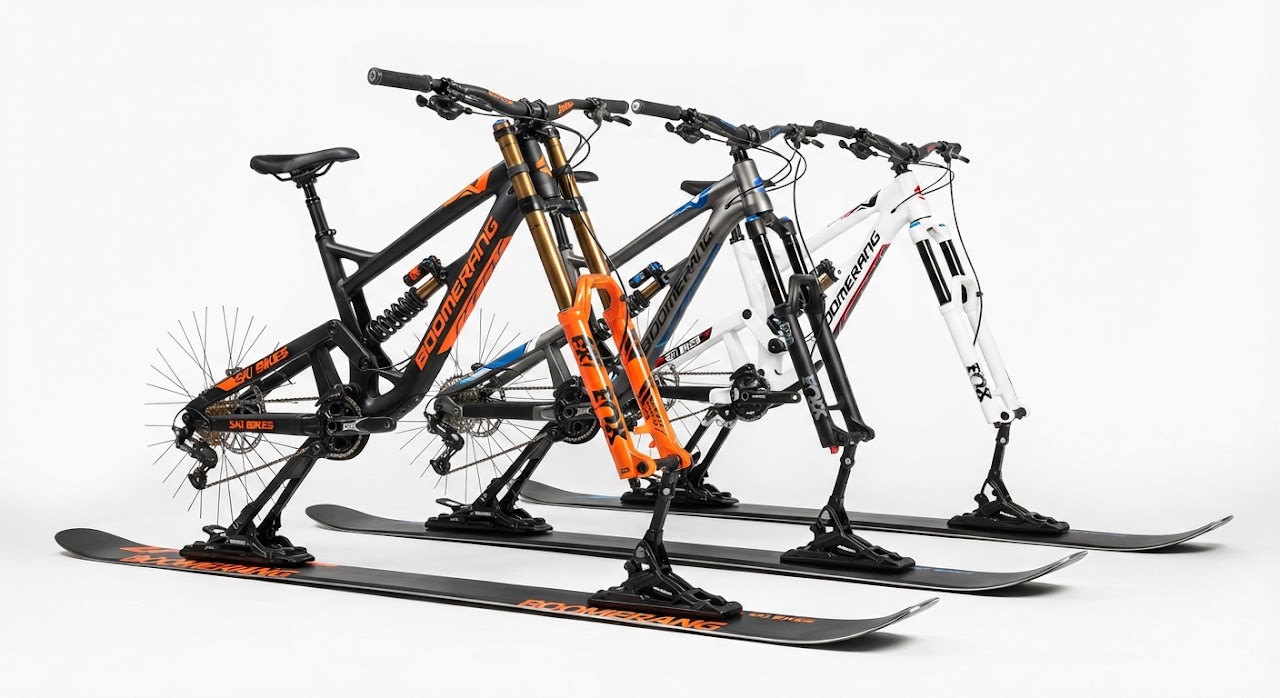
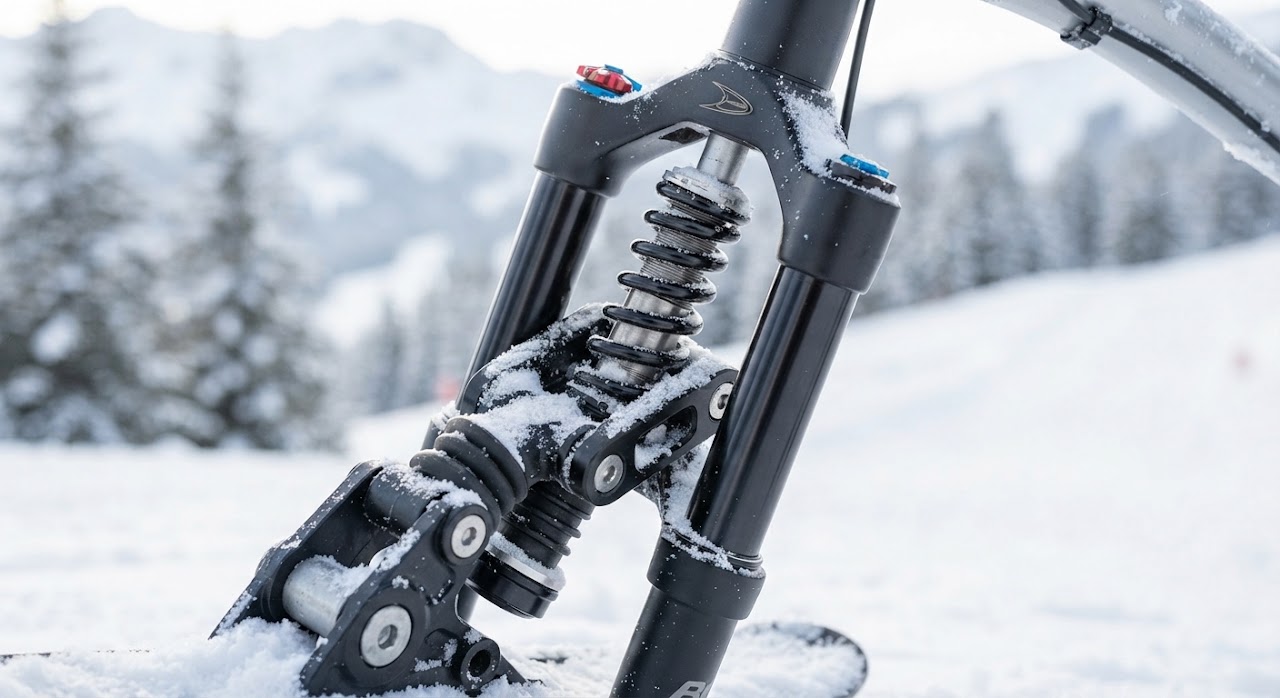
Ski Bike vs. Snowboard: The Transition Guide
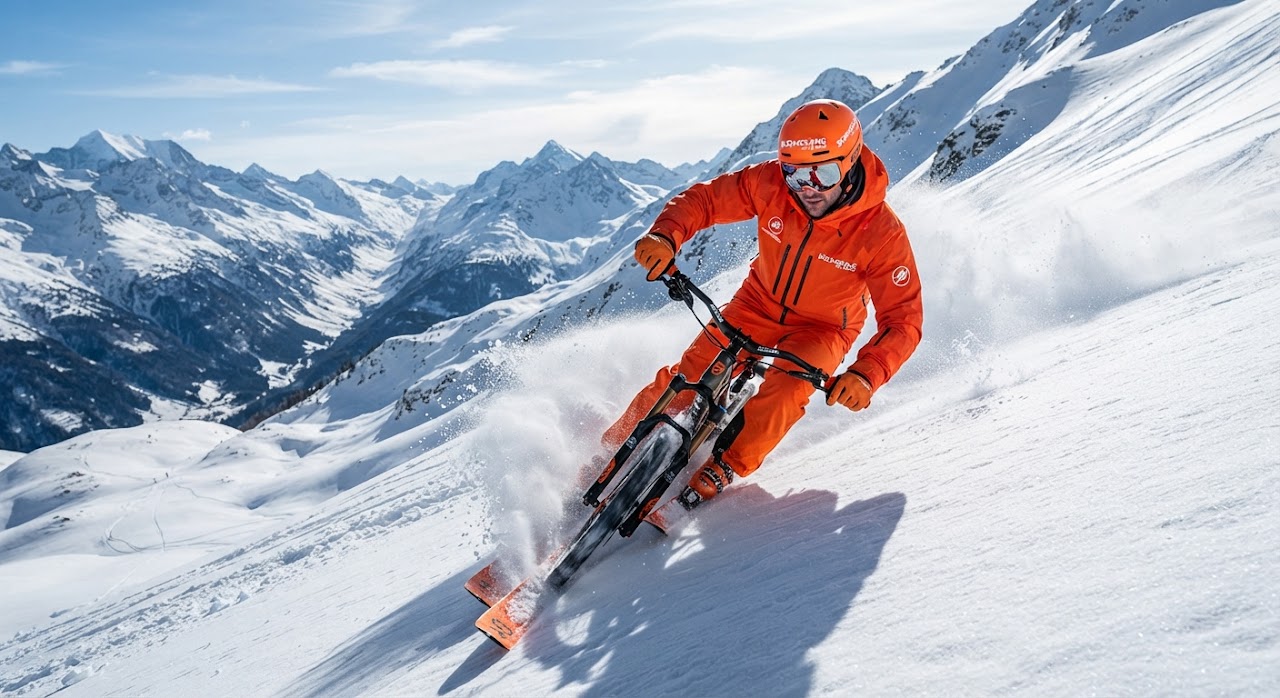
Switching to a ski bike from skiing or snowboarding isn’t starting from zero, but it isn’t a straight carryover either. Your existing balance and edge sense will help you progress faster than a true beginner, while some of your hardest-earned muscle memory will actively work against you for the first few sessions. Here’s what actually transfers, what doesn’t, and how to get through day one without wasting it.
What Actually Transfers From Skiing or Riding
Good news first: you’re not relearning balance or edge awareness from scratch.
- Snow feel: your read on how ice, groomers, and chop behave under an edge carries over directly.
- Weight distribution instincts: knowing to shift weight forward and back to manage speed and control translates almost immediately.
- Fall-line awareness: you already understand how to read a slope and choose a line, which is half the battle on any new equipment.
What doesn’t transfer as cleanly is how you generate a turn and how your body is positioned to do it — and that’s where snowboarders and skiers each hit different walls.
The Snowboarder’s Learning Curve
Losing the sideways stance
A snowboarder’s whole platform is built around riding sideways, with hips and shoulders countering each other to steer. On a ski bike you’re facing forward, straddling the frame, with independent left and right skis under your feet — there’s no board to twist as a single unit.
Rebuilding turn initiation
Snowboarders initiate turns by rolling the board onto its edge through ankle and knee flex. On a ski bike, turns come from leaning the frame and weighting the outside ski independently — a completely different mechanical chain. Expect your first turns to feel disconnected until you stop trying to “roll” the whole platform and start actively pressuring one ski at a time.
The Skier’s Learning Curve
What feels familiar — and what doesn’t
Skiers have a head start because the two-ski, forward-facing setup is conceptually similar. But your legs are no longer independent the way they are on skis — you’re often seated or semi-seated, steering through the frame and handlebars in addition to your skis, which changes how upper body countering works.
The biggest adjustment: steering with the frame, not just your legs
Skiers tend to over-rely on leg steering out of habit and under-use the frame lean that actually initiates a ski bike turn efficiently. Consciously practice initiating turns from hip and frame lean first, letting the skis follow, rather than trying to steer purely with your feet.
Muscle Memory Traps to Watch For
- Reaching for a missing edge: snowboarders especially will instinctively try to counter-rotate shoulders like they’re still on a board — resist it and let the independent skis do the work.
- Over-steering with legs: skiers often out-muscle the turn with leg input alone, missing the frame-lean input that makes ski bikes efficient to ride.
- Bracing wrong on falls: your fall instincts from your old sport won’t match how a ski bike goes down. Practice low-speed falls intentionally on a gentle slope before you’re moving fast enough for it to matter.
First-Day Tips That Actually Help
- Start on a green or easy blue run — you’ll be more control-limited than skill-limited on day one, and steep terrain punishes that gap.
- Practice straight-line braking and stopping before you try linked turns; a ski bike stops differently than a board or skis, and you need that skill before you need speed control mid-turn.
- Take a lesson or at least one supervised run with an experienced rider if your resort offers it — a few corrections in the first hour save days of reinforcing bad habits.
- Expect to fall more in the first hour than you have in years on your old equipment. That’s normal, not a sign you’re bad at this.
Lift and Resort Etiquette You Need to Know
Ski bikes load and ride lifts differently than skis or boards, and getting this wrong slows down the whole line.
- Confirm with lift operators how they want the bike loaded — some require removing the front ski or a specific loading position.
- Check your resort’s ski bike policy before you go; not every mountain allows them, and some restrict certain lifts or terrain.
- Give other riders extra space while you’re still learning to control speed and stop reliably — your unfamiliar equipment is unfamiliar to them too.
- Stay to the side when regrouping; a ski bike takes up more trail width than a skier standing still.
The riders who progress fastest are the ones who treat day one as pure control practice, not a chance to prove their old-sport skills transfer instantly.
Your balance and snow sense give you a real head start — but let go of your old turn mechanics early, put in a deliberate first day on easy terrain, and the switch to ski biking clicks faster than you’d expect.