Dialing In Your Suspension for Hardpack
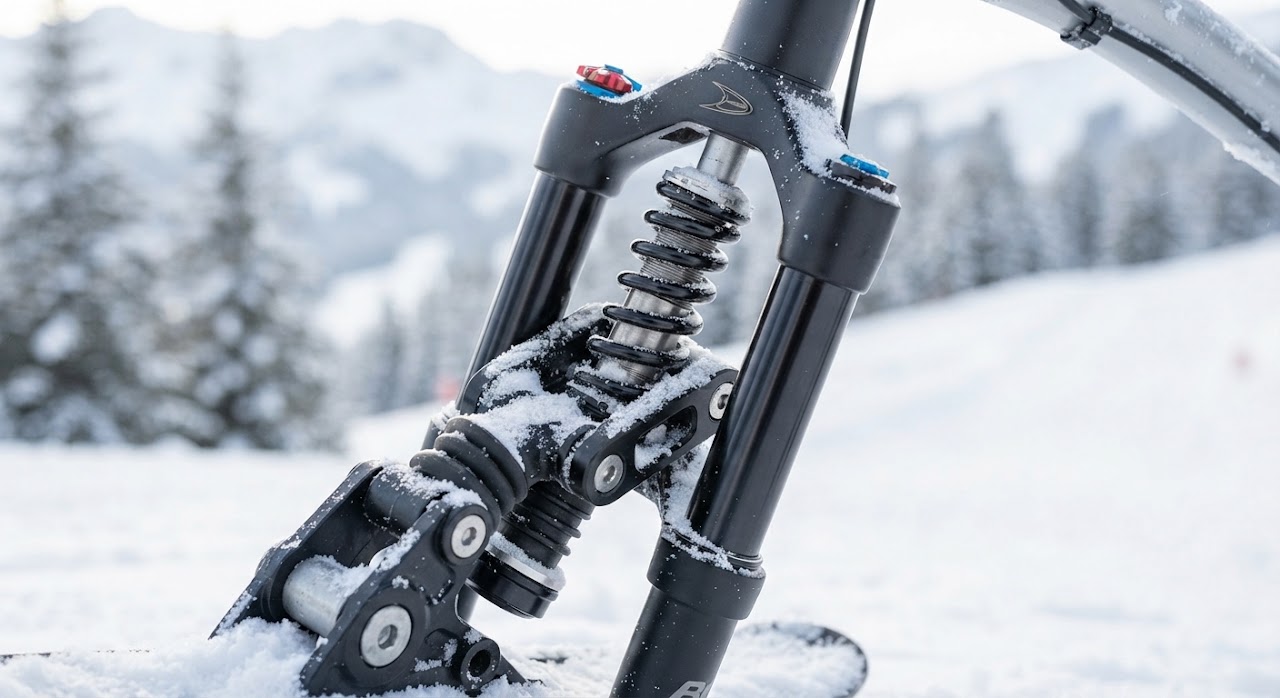
Hardpack punishes bad suspension setup faster than any other snow condition. On soft snow, sloppy rebound and wrong sag get masked; on ice and groomers, every mistake shows up as chatter, deflection, or a front ski that won’t hold an edge. Here’s how to dial in your compression, rebound, and sag specifically for firm, fast conditions.
Set Sag First — Everything Else Depends On It
Sag is the percentage of your travel used just from your body weight sitting on the bike, and it’s the foundation every other adjustment builds on. Get it wrong and no amount of rebound or compression tuning will fix the ride.
Target sag for hardpack
- Front fork: 15–20% of total travel. Firmer sag keeps the front ski from diving and wandering under braking on ice.
- Rear shock: 20–25% of total travel. Slightly more rear sag helps maintain traction without making the back end feel vague on hard turns.
Measure sag with the bike loaded in your normal riding stance, gear on, not just standing beside it. Use a zip tie on the stanchion or shock shaft, compress gently, and read the mark — don’t estimate.
Compression Damping: Firm Up for Precision
On hardpack you want the suspension to resist diving into its travel on hard edge-set and quick direction changes, because unwanted travel = lost edge contact.
- Add a few clicks of low-speed compression from your all-mountain baseline — this reduces brake dive and keeps the ski platform stable through a carved turn.
- Keep high-speed compression closer to stock; hardpack rarely produces the big square-edge hits that high-speed compression is tuned for, and over-firming it will transmit chatter straight into your hands and feet.
- If the bike feels harsh and skittery rather than precise, you’ve gone too firm — back off one or two clicks at a time.
Rebound: The Setting Most Riders Get Backwards
Rebound controls how fast the suspension returns after compressing, and on ice this is where most riders make their biggest mistake.
Why slower rebound wins on ice
Too-fast rebound causes the ski to pack back up and bounce off small irregularities in the snow — exactly the chatter that breaks edge contact on firm groomers. Slowing rebound down lets the ski settle and stay in contact with the snow between inputs.
- Start from your suspension manufacturer’s baseline rebound setting.
- Add 2–3 clicks slower (toward closed) for dedicated hardpack days.
- Test on a groomed run at moderate speed: if the front ski feels like it’s skipping or deflecting off small ridges, slow the rebound further.
- If the bike feels dead or packs down through consecutive turns without recovering, you’ve gone too slow — add a click back.
Common Mistakes That Kill Edge Grip
- Copying a friend’s settings: rebound and compression are weight- and riding-style-dependent. What works for a 150-pound rider on a mellow line will feel wrong on a 200-pound rider carving hard.
- Setting up on soft snow, riding on ice: always fine-tune on the actual condition you’re about to ride. A setup dialed for powder will feel vague and floaty on a firm morning groomer.
- Ignoring tire or ski edge sharpness: suspension tuning can’t compensate for dull edges. If you’re still skating out in turns after adjusting rebound and compression, check edge tune before touching suspension again.
- Over-firming everything: a suspension that’s too stiff transmits every surface irregularity directly to the rider, which reduces control on ice rather than improving it. Firm is not the same as harsh.
Your Hardpack Setup Checklist
Run through this before every hardpack session, especially after switching terrain from a powder day:
- Sag set to 15–20% front, 20–25% rear, measured in riding stance.
- Low-speed compression a few clicks firmer than your all-mountain baseline.
- High-speed compression left near stock.
- Rebound slowed 2–3 clicks from baseline; test and adjust based on how the ski tracks over small irregularities.
- Edge sharpness checked — suspension tuning only works if the edges can actually bite.
- One test run at moderate speed before committing to a full session, adjusting one variable at a time.
Change one setting at a time and test it before moving to the next — stacking multiple adjustments at once makes it impossible to know what actually fixed or broke the ride.
Dial in sag first, firm up compression for precision, and slow your rebound to keep the ski settled — do those three things in order and hardpack stops feeling like a fight and starts feeling like the terrain your bike was actually built for.