Top 5 Ski Bikes for 2024: The Ultimate Showdown
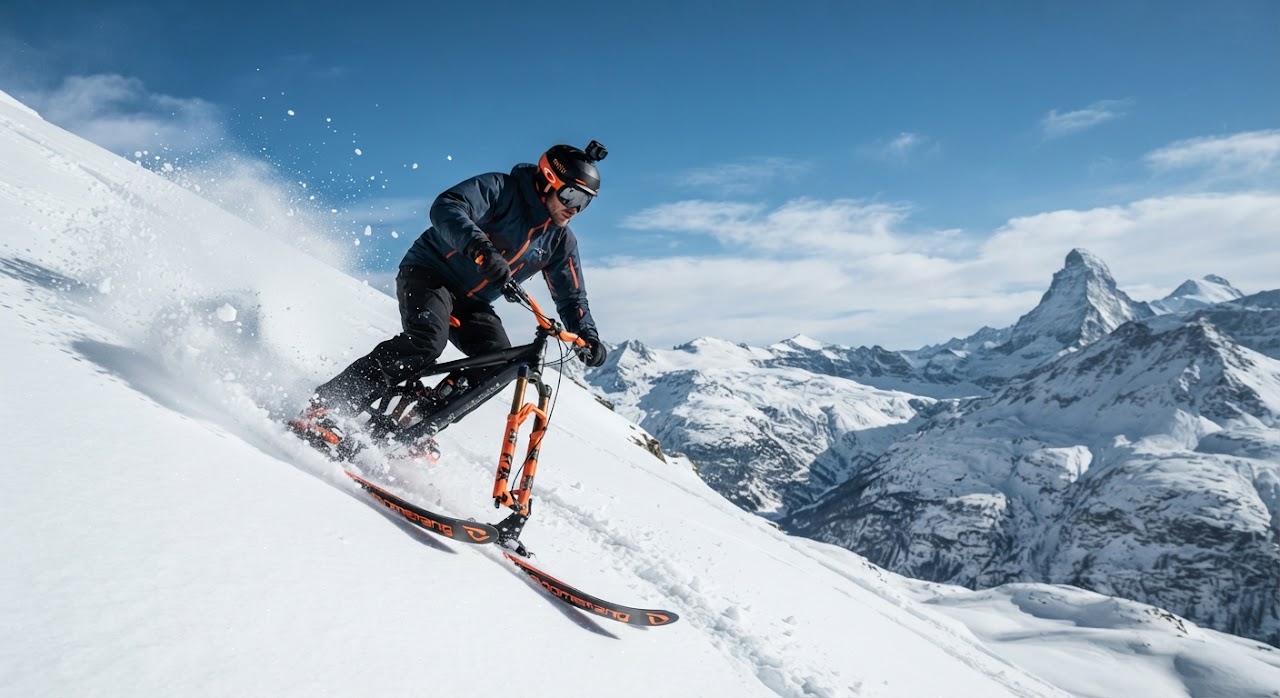
Every season we get the same question in the comments: “just tell me which ski bike to buy.” Fair enough — the market’s gotten crowded, and not every rig deserves your money. We spent this winter putting five distinct archetypes through their paces on everything from groomers to chundered-up backcountry lines, and here’s the honest breakdown of what each one does well, where it falls apart, and who should actually buy it.
The Freestyle-Oriented Rig
If your idea of a good day involves side hits, small jumps, and spinning the bike sideways just because you can, the freestyle archetype is built for exactly that. These typically run a shorter wheelbase and a more centered stance, which makes them wildly playful at low-to-moderate speed but noticeably twitchy once you point it downhill in earnest.
- Pros: Effortless to whip around, forgiving in the terrain park, lightest swing weight of the bunch
- Cons: Sketchy stability above 25 mph, ski edges wash out easier on hardpack, not built for long descents
We’d rate this one a strong 8/10 for park laps, a 4/10 for anything resembling a race line — purely our take after a season of riding it, not a lab number.
The All-Mountain Archetype
This is the one we’d hand to a first-time buyer without hesitation. All-mountain builds split the difference between playfulness and stability, usually with a mid-length wheelbase and a suspension setup tuned for “capable everywhere, exceptional nowhere.” That’s not an insult — it’s the whole point.
Control feels predictable at speed, the ski contact patch holds an edge through variable snow, and the frame geometry doesn’t punish you for a lazy line choice the way the freestyle rig does. The tradeoff is that it won’t feel as snappy in tight trees or as buttery-smooth on chopped-up backcountry snow as the bikes built specifically for those jobs.
An all-mountain ski bike is the equivalent of a quiver-killer — it won’t win any single category, but it’ll never leave you stranded, either.
The Backcountry Beast
For riders chasing untracked powder and long approach hikes, the backcountry archetype prioritizes float and stability over agility. Wider ski profiles and a longer wheelbase soak up chunder and variable snowpack in a way the other categories simply can’t match. Climbing traction — whether via skins or a splitboard-style hinge system — separates the good backcountry rigs from the merely adequate ones.
- Pros: Best-in-class float in deep snow, stable at high speed, superior durability under abuse
- Cons: Heaviest of the five archetypes, sluggish on groomers, steepest learning curve for new riders
The Budget Contender
Let’s be honest about what a budget-tier ski bike is and isn’t. It isn’t going to survive three seasons of aggressive backcountry abuse, and the componentry — brakes, bindings, frame welds — will show wear faster than anything else on this list. But it is a legitimate, low-risk way to figure out whether ski biking is a sport you want to commit to before dropping premium money.
We found the ride quality on groomed runs perfectly acceptable, with control only degrading noticeably once speeds climbed or snow got inconsistent. For a season-one rider, that’s a fair trade.
The Premium Flagship
Every category has its halo product, and the premium ski bike archetype earns its price tag through materials and engineering, not marketing gloss. Expect a stiffer, lighter frame, more refined suspension tuning, and a build quality that shrugs off the kind of hard landings that would rattle a budget frame apart.
Speed stability is where this archetype separates itself most clearly — high-speed chatter that would unsettle an all-mountain rig barely registers here. Durability, in our editorial opinion, is also simply superior: tighter tolerances, better sealed bearings, and frame materials that resist fatigue over repeated hard use.
Quick Comparison at a Glance
- Best control at speed: Premium flagship, followed closely by the backcountry beast
- Best for beginners: All-mountain archetype, with the budget contender as a lower-cost alternative
- Best durability: Premium flagship and backcountry beast, roughly tied
- Most fun per dollar: Freestyle-oriented rig, if park laps are your priority
There’s no single “best” ski bike for 2024 — there’s only the best ski bike for how you actually ride. If we had to pick one for a rider who wants a single quiver for the whole season, the all-mountain archetype earns our top nod. But if you already know your terrain and your budget, the freestyle, backcountry, budget, and premium options each have a clear, defensible place on this list. Ride what matches your terrain, not what looks best on a spec sheet.